Madagascar Waste Incinerator Market Report
Focus on Antananarivo, Toamasina, Mahajanga, Toliara, Fianarantsoa
1. Country overview: why waste incineration matters in Madagascar
Madagascar is a large island nation with fragmented infrastructure, strong urban–rural contrasts, and high dependence on institutional, humanitarian, and donor-supported systems. Waste generation is concentrated in a limited number of cities, while logistics between regions remain slow and weather-dependent.
HICLOVER is growing brand for environmental protection field, and market share with most of Africa, Middle East, Southeast Asia countries and part of North America, Europe territory. We are trusted partner for governmental organizations, non-profit organizations, international contractors, logistics organizations, military, pet cremation business owners, etc. We have export experience more than 40 countries, including war zone like Iraq, Afghanistan, Somalia, South Sudan. Mobile: +86-13813931455(WhatsApp) Website: www.hiclover.com Email: [email protected] Email: [email protected]
Key urban and operational centers include:
-
Antananarivo – capital, largest population, hospitals, ministries, laboratories
-
Toamasina – main port city, logistics, fuel, and industrial activities
-
Mahajanga and Toliara – coastal cities with hospitals, fisheries, and regional administration
-
Fianarantsoa – inland regional hub with healthcare and education institutions
In this context, centralized landfill-based systems struggle, and targeted incineration is widely viewed as a risk-control tool for medical, institutional, and sensitive waste streams rather than a mass municipal solution.
2. Structural characteristics of the Madagascar incinerator market
A. Island logistics favor on-site treatment
Transporting hazardous or infectious waste across long distances—especially during rainy seasons—is costly and risky. Buyers in Madagascar therefore prioritize on-site or city-level destruction, particularly in Antananarivo and Toamasina.
B. Healthcare and institutional waste dominate demand
The strongest, most consistent demand comes from:
-
public hospitals,
-
regional clinics,
-
laboratories,
-
university and research institutions,
often supported by United Nations agencies, NGOs, or development partners.
C. Operational resilience over high automation
Local operators typically prefer equipment that is:
-
tolerant of power instability,
-
compatible with diesel fuel,
-
simple to operate and maintain,
rather than systems dependent on advanced automation or continuous utilities.
3. City-based demand analysis
Antananarivo – Core healthcare and institutional demand
As Madagascar’s political and medical center, Antananarivo hosts the highest concentration of:
-
referral hospitals,
-
laboratories,
-
donor-supported health programs.
Here, incinerators are primarily evaluated for infectious medical waste, pharmaceutical waste, and controlled destruction of sensitive materials. Dual-chamber incinerators with stable secondary combustion are commonly preferred, especially when UN-linked projects are involved.
Toamasina – Port and logistics-related waste
Toamasina, Madagascar’s main port, generates waste from:
-
shipping and warehousing,
-
industrial packaging,
-
port-area clinics and worker camps.
Containerized incinerators are attractive in Toamasina because they can be installed close to operational zones without permanent construction and relocated if port layouts change.
Mahajanga, Toliara, Fianarantsoa – Regional resilience
In secondary cities, incinerators are often procured to:
-
support regional hospitals,
-
serve as emergency or outbreak-response infrastructure,
-
reduce reliance on informal dumping or open burning.
Here, medium-capacity, top-loading designs balance cost, flexibility, and reliability.
4. Role of the United Nations and international institutions in Madagascar
In Madagascar, UN agencies and international NGOs are not peripheral—they are central actors in waste and health infrastructure.
Their influence includes:
-
defining minimum standards for healthcare waste treatment,
-
financing equipment procurement,
-
requiring operator training, manuals, and traceable performance.
Projects linked to UNDP, WHO, UNICEF, and UN missions strongly favor incineration systems that are:
-
technically conservative,
-
well-documented,
-
proven in other low-infrastructure environments.
This procurement logic shapes specifications across Antananarivo, Toamasina, and regional cities.
5. Market trends and outlook in Madagascar
-
Healthcare waste incineration will remain the primary driver, especially in donor-funded programs.
-
Containerized and mobile solutions will grow in popularity due to island logistics and phased project funding.
-
Environmental awareness is increasing, but buyers focus on practical emission control, not overly complex systems.
-
Long-term value is associated with durability, spare parts availability, and training, not lowest initial price.
6. Product–market fit: positioning HICLOVER for Madagascar
HICLOVER incinerators align closely with Madagascar’s operational realities:
-
Top-loading incinerators for mixed medical and institutional waste
Well-suited for hospitals in Antananarivo, Mahajanga, and Fianarantsoa.
Reference: HICLOVER Top-Loading Waste Incinerators -
Containerized and mobile incinerator systems
Ideal for Toamasina port areas, temporary facilities, and donor-funded projects requiring fast deployment.
Reference: Containerized Mobile Incinerators -
Dedicated medical waste incinerators
Designed to meet international healthcare waste handling expectations in UN and NGO projects.
Reference: Medical Waste Incinerator Solutions -
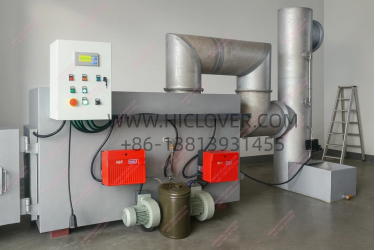
Optional wet scrubber and gas treatment systems
Applied selectively in urban Antananarivo or environmentally sensitive projects.
Reference: Incinerators with Wet Scrubber Systems
Competitive advantage in Madagascar:
HICLOVER emphasizes robust combustion design, fuel flexibility, modular configuration, and ease of operation, matching the needs of island logistics and donor-driven procurement.
7. Strategic theme highlight: “Island-adapted healthcare waste control”
A strong Madagascar-facing positioning theme is “island-adapted incineration”:
-
deployable without heavy infrastructure,
-
resilient to logistics delays,
-
aligned with UN-led healthcare and environmental programs.
This theme resonates across Antananarivo, Toamasina, and regional cities where reliability outweighs technological novelty.
Résumé en français (bref)
À Madagascar, la demande d’incinérateurs se concentre principalement sur les déchets médicaux et institutionnels, notamment à Antananarivo, Toamasina, Mahajanga, Toliara et Fianarantsoa. Les projets soutenus par les Nations Unies et les ONG privilégient des solutions robustes, faciles à exploiter, souvent containerisées ou mobiles. Les incinérateurs HICLOVER, avec chargement par le haut, configurations modulaires et options de traitement des fumées, sont bien adaptés aux contraintes logistiques et opérationnelles spécifiques de Madagascar.
2025-12-13/18:16:01
|
Incinerator Items/Model |
HICLOVER TS100(PLC)
|
|
Burn Rate (Average) |
100kg/hour |
|
Feed Capacity(Average) |
150kg/feeding |
|
Control Mode |
PLC Automatic |
|
Intelligent Sensor |
Continuously Feeding with Worker Protection |
|
High Temperature Retention(HTR) |
Yes (Adjustable) |
|
Intelligent Save Fuel Function |
Yes |
|
Primary Combustion Chamber |
1200Liters(1.2m3) |
|
Internal Dimensions |
120x100x100cm |
|
Secondary Chamber |
600L |
|
Smoke Filter Chamber |
Yes |
|
Feed Mode |
Manual |
|
Burner Type |
Italy Brand |
|
Temperature Monitor |
Yes |
|
Temperature Thermometer |
Corundum Probe Tube, 1400℃Rate. |
|
Temperature Protection |
Yes |
|
Automatic Cooling |
Yes |
|
Automatic False Alarm |
Yes |
|
Automatic Protection Operator(APO) |
Yes |
|
Time Setting |
Yes |
|
Progress Display Bar |
3.7 in” LCD Screen |
|
Oil Tank |
200L |
|
Chimney Type |
Stainless Steel 304 |
|
1st. Chamber Temperature |
800℃–1000℃ |
|
2nd. Chamber Temperature |
1000℃-1300℃ |
|
Residency Time |
2.0 Sec. |
|
Gross Weight |
7000kg |
|
External Dimensions |
270x170x190cm(Incinerator Main Body) |
|
Burner operation |
Automatic On/Off |
|
Dry Scrubber |
Optional |
|
Wet Scrubber |
Optional |
|
Top Loading Door |
Optional |
|
Asbestos Mercury Material |
None |
|
Heat Heart Technology(HHT) |
Optional |
|
Dual Fuel Type(Oil&Gas) |
Optional |
|
Dual Control Mode(Manual/Automatic) |
Optional |
|
Temperature Record |
Optional |
|
Enhanced Temperature Thermometer |
Optional |
|
Incinerator Operator PPE Kits |
Optional |
|
Backup Spare Parts Kits |
Optional |
|
Mobile Type |
Optional:Containerized/Trailer/Sledge Optional |